C# Freelancing: How to Land More Projects and Deliver Faster
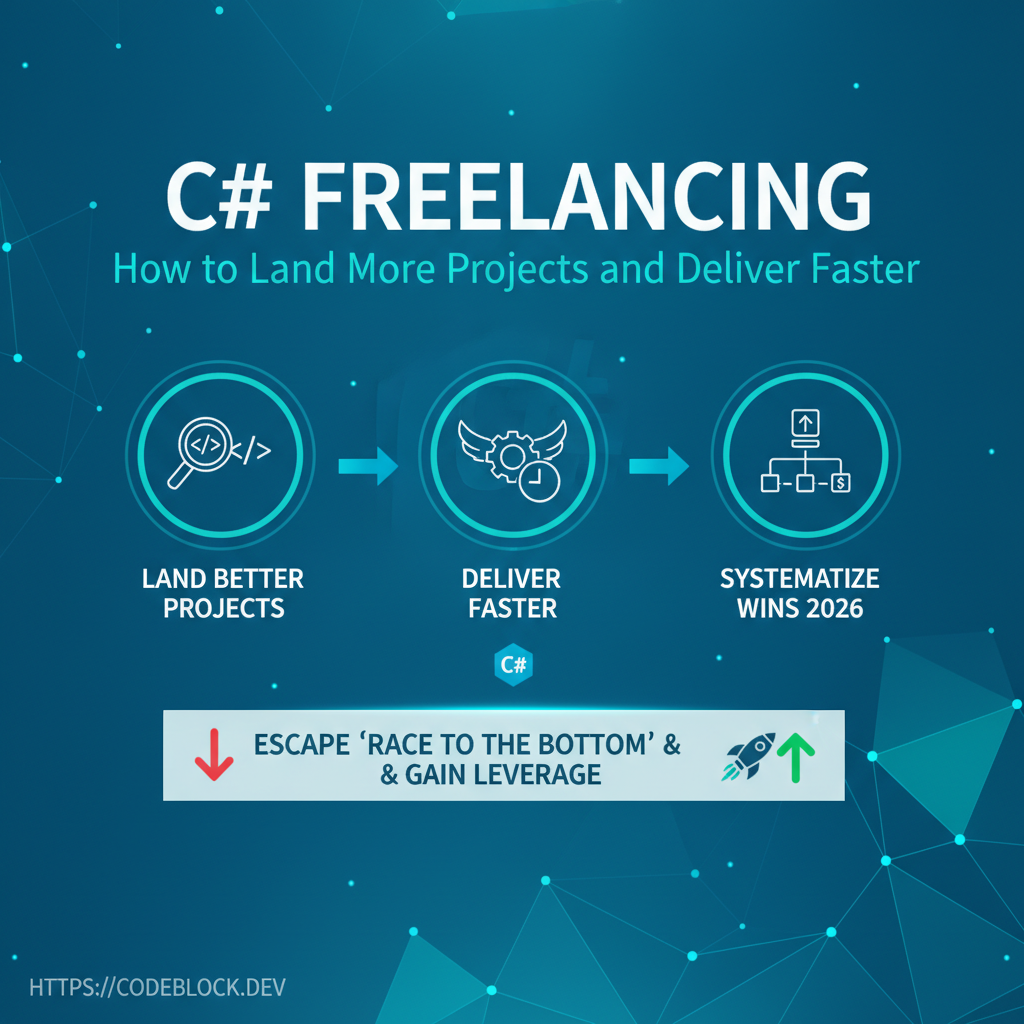
Being a C# freelancer in 2026 means competing in a market where speed, reliability, and specialization pay. Rates are up, expectations are higher, and every client wants SaaS-level foundations done yesterday. Here’s how the top C# freelancers keep winning projects and shipping faster than agencies—with less burnout.
Standing Out (and Avoiding the Race to the Bottom)
- Target project types that fit C# strengths: SaaS MVPs, migrations, Blazor UIs, legacy rescue, and third-party API integrations.
- Network in the right places: .NET job boards, agency partnerships, LinkedIn groups, and Discords specialized in SaaS/C#.
- Don’t list just skills—show actual delivered value: screenshots, testimonials, and “delivered in days, not weeks” stories.
- Proposal tip: Always include onboarding checklists, clear milestones, and “how I’ll keep you in the loop.”
Fast Delivery Is Delivery You Can Charge For
- Leverage reusable onboarding kits: checklists, welcome docs, requirement intake templates.
- Script as much as possible: cloud deploys, initial project setup, CI/CD pipelines.
- Bake in billing, auth, admin, deployment—use a real SaaS DevKit or your own battle-tested boilerplate.
- Track your own cycle times. Quote new projects with speed confidence only if your system supports it.
Foundation Code (And How It Kills Project Margins)
- Never start fresh: start from a full-featured boilerplate (CodeBlock DevKit, your own, or proven open source).
- Only build custom logic for the features that make your client’s business unique.
- Automate repeat infrastructure: use published modules for Stripe/payments, reporting, admin, roles, and monitoring.
Where to Find the Best C# Freelance Work
- Check Upwork, Toptal, DotNet-specific boards, and also partner with agencies that don’t have enough C# in-house.
- Most value: Lean into recurring relationships and referrals from clients who needed you to rescue, speed-up, or stabilize a project.
Winning Proposals and Repeat Client Systems
- Focus the proposal on deadlines, speed to launch, and real deliverable outcomes, not hourly rates or code buzzwords.
- Show project plans, staging URLs, code samples, and a post-project handoff routine.
- Pitch retainers for long-term or on-call support after handoff.
DevKit Leverage for the C# Freelancer
CodeBlock DevKit and similar SaaS kits let you:
- Cut project timelines by weeks (sometimes months)
- Onboard clients in hours with working auth, billing, and dashboard modules
- Quote fixed fees confidently by taking unknowns off the table
- Focus on shipping value and experiences instead of plumbing
- Build a true “productized service” using your DevKit foundation
How to Scale (Without Burnout)
- Modularize everything: use checklists, scripts, API specs, docs, templates for each project stage
- Limit active client load, estimate conservatively, and automate status updates
- Use analytics (time tracking, deliverable scoring) to improve project-to-project
- Systematize handoff: always close projects with clear documentation and the offer of ongoing support
Success Checklist for 2026 C# Freelancers
- Project onboarding kit ready for every client
- Use SaaS boilerplate/DevKit for all new builds
- Quotes and contracts have change clauses, timelines, and split milestones
- Proposals center on speed, reliability, and outcomes
- System in place for automating post-project support and up-sells