What Is SaaS? A Simple Guide (With a Real Example)
You’ve probably used a SaaS today without realizing it.
No technical background required. No complicated terms. Just a simple explanation of what SaaS is, how it works, and why so many people are building them.
By the end, you might even start thinking:
“Wait… could I build one too?”
Start With Something Simple
Before we explain SaaS, let’s start even simpler.
A website is something you visit. You open a link, and you read or watch something.
A web application is different. It does something for you.
- You sign in
- You create or save something
- You interact with it
Think of dashboards, tools, or platforms you log into.
Now we’re ready for SaaS.
So What Is SaaS?
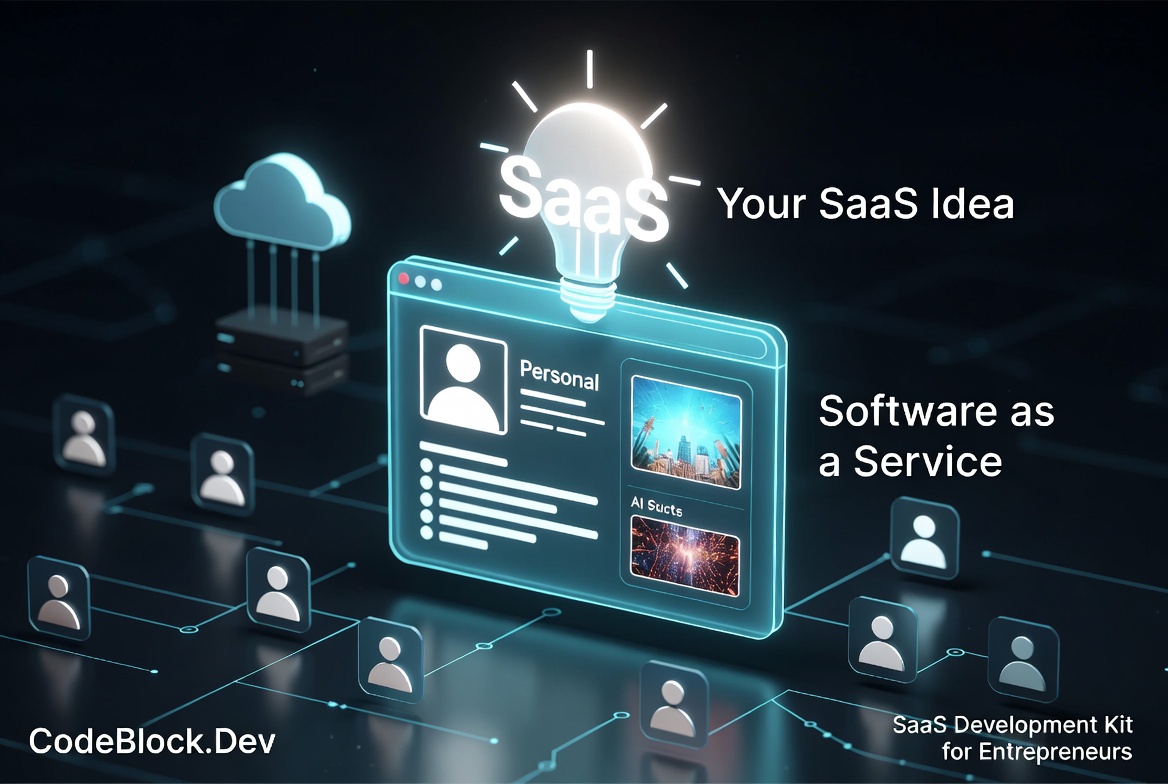
SaaS stands for Software as a Service.
That sounds technical, but it’s actually very simple:
SaaS is software you use online, instead of installing on your computer.
You don’t download it.
You don’t manage it.
You just open it in your browser and use it.
Usually, you:
- create an account
- use the product online
- and sometimes pay monthly or yearly
That’s it.
A Simple Way to Think About It
Instead of selling software once, SaaS is about:
Building one product and letting many people use it online.
The creator:
- runs the servers
- updates the product
- improves it over time
The user:
- just logs in and uses it
A Real Example: Hey It Is Me
Let’s make this real.
Hey It Is Me is a SaaS product.
It lets you create your own personal page where you share facts about yourself, along with AI-generated images.
Here’s how it works:
- You sign up
- You create your page
- The system helps generate content using AI
- You get a unique link to share with others
Now you have your own online identity page.
Why this is SaaS:
- You don’t install anything
- Everything runs online
- Your data is saved in your account
- The product works for many users at the same time
- There are free and paid plans—upgrade to unlock more features
This is exactly what SaaS looks like in real life.
Why People Are Excited About SaaS
Now here’s where it gets interesting.
From the outside, SaaS might look like just another app.
But for builders, it’s different.
1. Build Once, Many People Use It
You don’t create a new product for every customer.
You build it once, and users sign up.
2. You Can Start Small
You don’t need a big team.
Many SaaS products are started by:
- one developer
- or a very small team
3. It Doesn’t Take Years
If you focus, reuse the right tools, and avoid overbuilding:
You can launch a real SaaS in weeks, not years.
Sometimes, even in about a month.
4. Low Initial Cost
You don’t need:
- an office
- a big investment
- a large team
You just need a little time, consistency, and one good idea.
That’s why so many developers and creators are exploring SaaS.
So… Can You Build One?
This is the real question.
And the honest answer is:
Yes. But not by starting from zero every time.
Because a SaaS is not just your idea.
It also needs:
- authentication (login, signup)
- payments and subscriptions
- admin tools
- user management
- and more
That’s where most time goes.
A Smarter Way to Build
Instead of building everything from scratch, many developers use a foundation.
That’s exactly what CodeBlock DevKit is for.
It gives you the core parts of a SaaS:
- authentication
- admin panel
- pricing and subscriptions
- and other essential modules
So instead of spending weeks on setup, you focus on:
your idea, your product, your users
What Comes Next?
This article is just the starting point.
In future articles, we’ll go deeper into things like:
- Who builds SaaS products?
- How do you find a good SaaS idea?
- How do you get users after launch?
- How do you price your SaaS?
- How do you make money from it?
Final Takeaway
SaaS is simply:
Software you use online, built once, and used by many people.
You’ve already used it.
Now you understand it.
The next step?
Maybe… you build one.