Building a SaaS From Scratch: A Complete Timeline
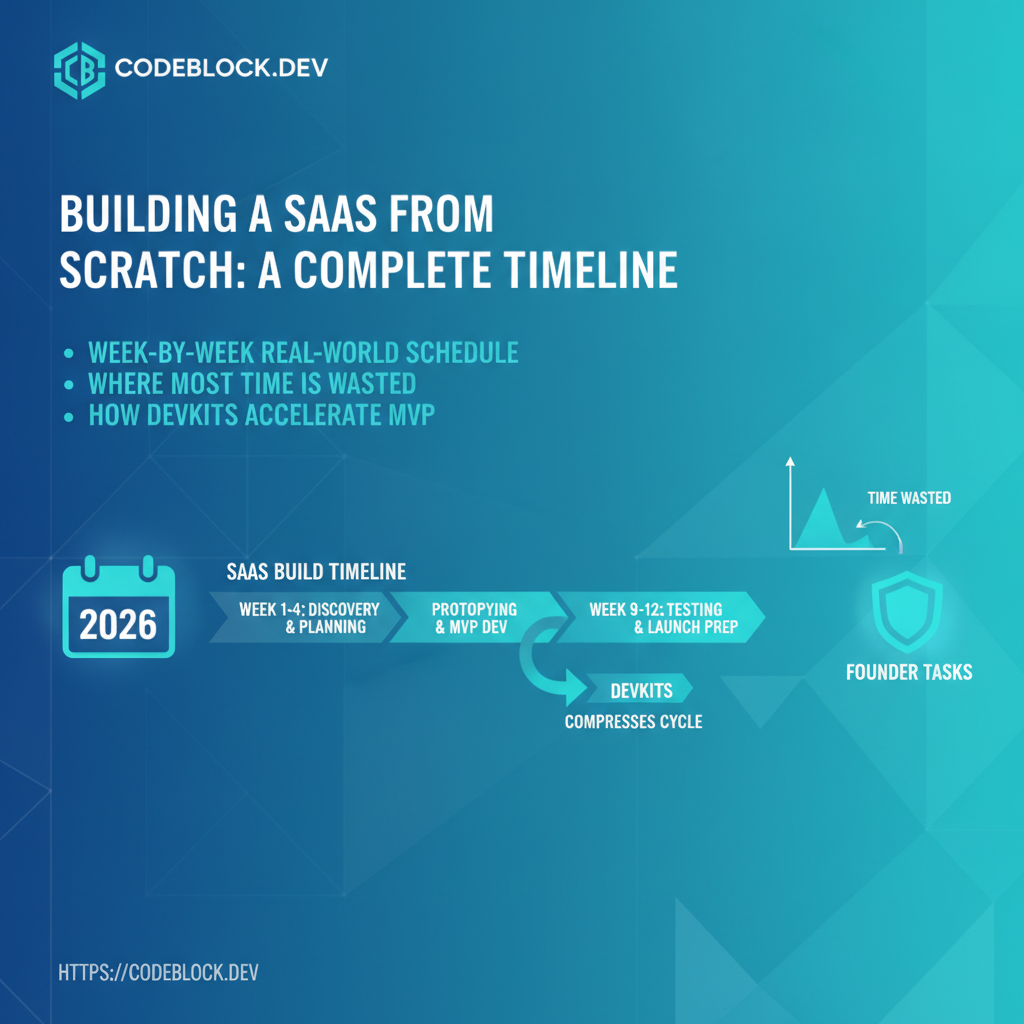
Shipping a SaaS successfully is all about sequencing. Here’s a modern, actionable, fine-grained week-by-week timeline, with detailed tasks, common pitfalls, and pro shortcuts that separate teams that launch fast from ones that never escape MVP.
Week 1: Research and Scope
- Identify and interview target customers (at least 5, live, real problems)
- Pinpoint the one core use case and delineate “must ship” for V1
- Sketch quick customer journeys, user stories, draft onboarding
- Choose SaaS stack (weigh dev skill, time to deploy, integration needs—not just hype)
- Lock in your SaaS’s one-line value proposition (test with potential user!)
Weeks 2–3: Foundation & Core Modules (Don’t Reinvent)
- Set up modular SaaS boilerplate: auth flow, payment, user mgmt, admin, env config
- Repo structure: main branch flow, local/dev/prod env, initial migration/seeding
- CI/CD pipeline (automate from day one: build/test/deploy, branch-to-stage preview)
- Cloud account(s), domain, DNS, SSL set up
- Staging environment mirrors prod
- Time spent here with a DevKit (like CodeBlock) cuts 4–8 weeks: SaaS infra is repeat work—don’t rebuild
Weeks 4–6: Core Product, Integration, and Feedback
- Ship the core user-facing functionality (single “aha” moment)
- Integrate third-party APIs, mail, or analytics
- Onboard early access users with live feedback survey
- Enable event/logging—even basic—capture errors, usage, and activation
- Deploy often to staging, run real UAT before each new feature
- Common fail: scope bloat, not learning what people truly use
Week 7: QA, Launch Polish, and Support Prep
- Automated and manual E2E tests across supported browsers/devices
- Address every P0 polish/action block (dangling error, onboarding confusion, email delivery)
- Lock down admin panel, set roles/permissions for support
- Build launch support docs, quick-start FAQ, and hotfix process
- Dry run: new user from signup → pay → upgrade/downgrade → cancel → refund
- Have a “success script” for customer thank you/follow-up
Launch Week: Shipping and Iteration
- Ship! Point DNS to prod, monitor error logs, and conversions in real-time
- Announce in targeted communities, product forums, and nurture “first 10” users
- Iterate on onboarding/activation friction with every support ticket/convo
- Deploy hotfixes via CI/CD, capture and fix missing polish immediately
- Focus: support, feedback, quick value delivery—not pushing big new features yet
How DevKits and Boilerplates Compete on Speed
CodeBlock DevKit and similar starter kits compress the 2–6 week SaaS infrastructure grind into days. Plug in working modules—auth, payments, admin, monitoring, multi-tenant—and focus almost entirely on what’s unique.
- Teams using boilerplates consistently launch and iterate faster, and fix user/market fit earlier
Growth Beyond Launch: MVP to MRR
- Add analytics: track activation, cohort retention, trial→paid, churn
- Plan first “delight” features (quick wins for early adopters)
- Monitor support/feedback as main input to roadmap
- Schedule and ship small, reliable updates—avoid enormous, lagging “v2”s
- Onboard early paid users into referral, testimonial, or beta programs
Launch/Build Checklist
- Core use case validated by live conversations
- SaaS boilerplate + CI/CD ready
- Basic analytics, logs—ship with MVP
- Real users in staging before launch
- Hotfix and rollback flow in place
- Support/FAQ docs and onboarding flow live
- Early access “founder” users nurtured, converted to first paid
- Admin panel/roles locked down for launch
- Plan for continuous deployment post-launch