Dotnet Freelance Projects: How to Find and Deliver Them Faster
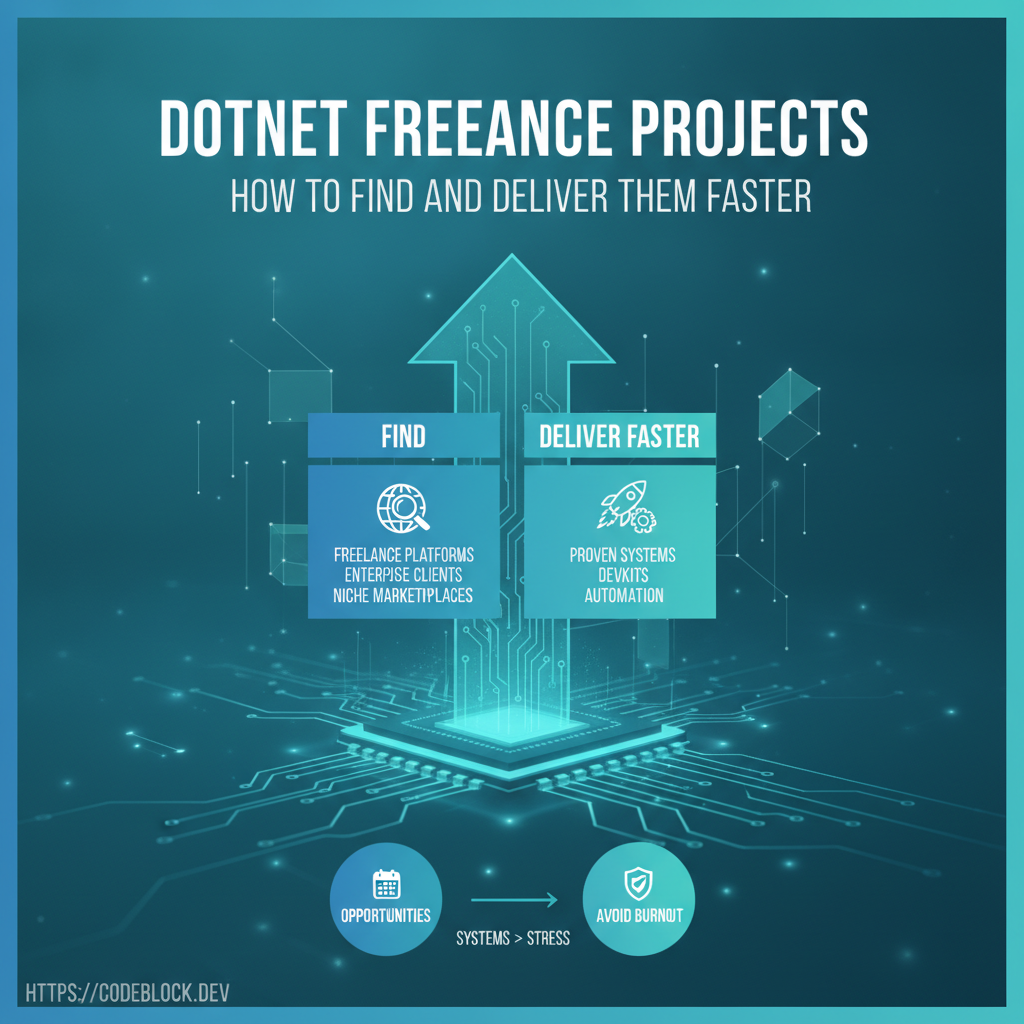
.NET is a mature, high-demand skillset for freelance development—but the best projects (and highest reviews) go to those who combine technical knowledge with process mastery. Here’s how to find more lucrative .NET freelance gigs and deliver them with speed, quality, and sanity in 2026.
Finding High Value Projects (2026-Style)
- Specialist boards: Go beyond Upwork—check .NET/Blazor Discords, agency partner referral lists, niche job platforms (Indie Hackers, SaaS Operator, Dev.to job boards).
- Portfolio credibility: Document every launch, migration, or SaaS client in your own showcase or blog posts. Use before/after snapshots, code samples, even short Loom walkthroughs.
- Fast response: Many quality freelance requests get assigned to the first contractor to respond with real proof: show up with a solved example, not just words.
- Direct networking: Build relationships with product managers, agency teams, or past clients who can recommend you into higher-quality projects.
Building a Repeatable Delivery Engine
- Automate onboarding, deploys, and testing (CI/CD scripts, standardized infrastructure)
- Create your own “project skeleton” with modules for user auth, payments, admin, and team management
- Handoff checklist for every client: docs, credentials, support plan, post-project enhancement options
- Use retrospectives to capture what can be improved on every new build
Never Start From Scratch: DevKits and Repeatable Modules
CodeBlock DevKit and similar tools mean:
- Faster ramp-up: You jump directly to the unique value with every project
- Less risk: Module testing is done once, not re-invented for every project
- Happier clients: Faster launch, less risk, clearer upgrades, and easier long-term support
Keeping Clients and Avoiding Burnout
- Stay organized: automate progress emails, use kanban/boards to visualize workflow
- Batch similar tasks to avoid “context switching” fatigue
- Build in downtime and protect your schedule
- Flag scope creep early, and use contract clauses to protect yourself
- Encourage honest feedback and NPS reviews after launch
Project Delivery/Client Success Checklist
- Fast, tailored response to every quality lead
- Automated onboarding and environment ready for each new build
- Use a full DevKit or modular boilerplate for 90% of projects
- Reusable handoff docs, project wrap-up, and up-sell materials
- Retrospective after every launch—lessons logged for next time