How to Build a Recurring Revenue SaaS (From $0 to First Subscriber)
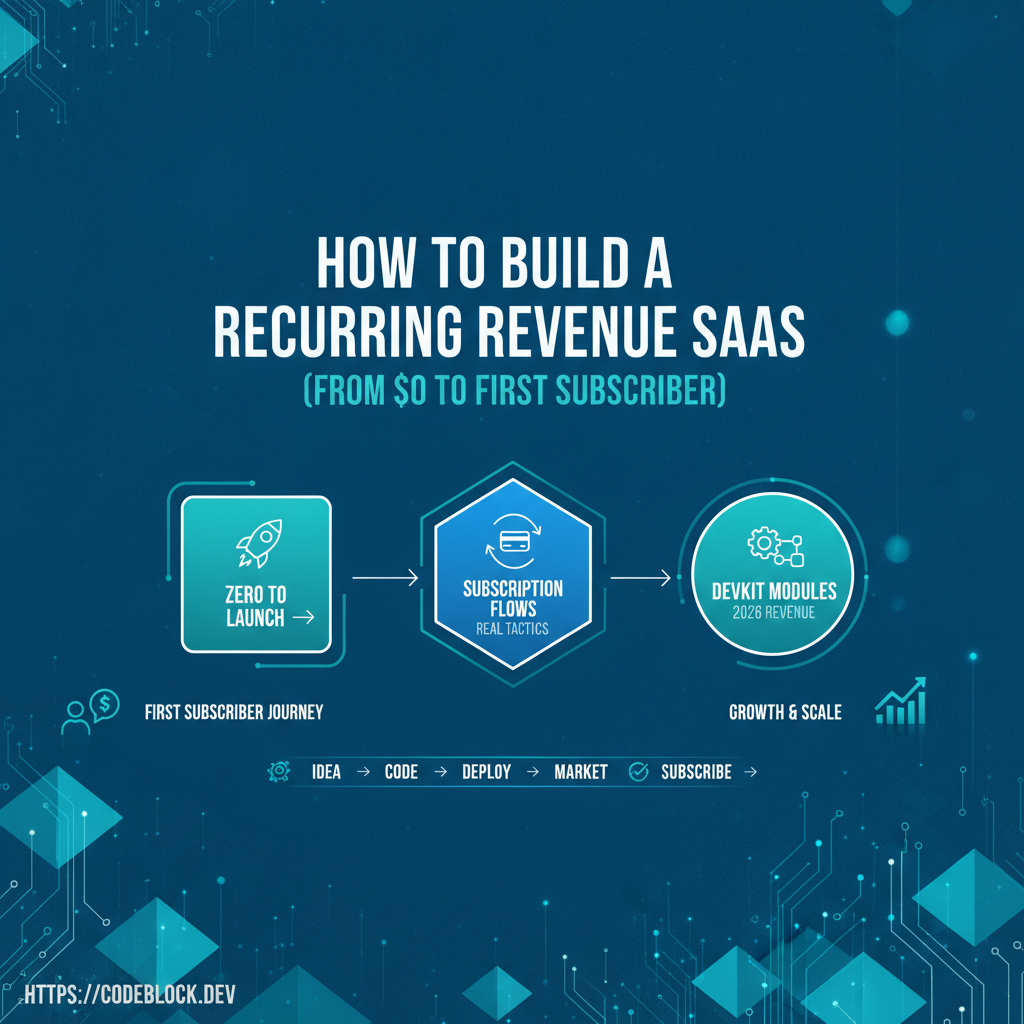
The step from zero to your first paying subscriber is the hardest (and most important) move in SaaS. Recurring revenue is the engine that drives valuation, cash flow, and product iteration. Here’s a practical, detailed roadmap for SaaS founders pushing through the awkward zero-to-one and building toward sustainable MRR in 2026.
1. Understand “Recurring Revenue” — Why Subscriptions Win
- Predictability: Monthly or annual revenue lets you plan, invest, and grow
- Valuation: Investors rate SaaS MRR far above one-off software sales
- Customer Value: Users prize ongoing updates, support, and trust the software will be there tomorrow
Don’t chase every user—focus on delivering true, ongoing value your core persona will renew for, not just try once.
2. Nail Your Market and MVP Launch
- Pinpoint the pain: Get super-specific—one target user, one job solved.
- Validate willingness to pay: Use landing pages, waitlists, “pre-pay for beta access”, and honest pricing polls.
- Skip custom builds: Use templates or devkits (like CodeBlock DevKit) to launch the core app. Focus resources on what only you can build.
3. Choose Your Monetization Model
- Subscriptions: Start with monthly unless strong user reasons suggest annual only (B2B: annual, B2C/freelancers: monthly plus annual discount)
- Trials/freemium: Offer limited trials with in-app upgrade nudges. Get users to a successful “aha!” in zero friction.
- Transparent pricing: Place plans in the first click path; avoid gated or “contact sales” pricing unless you’re true enterprise.
- Coupons/discounts: Seed early growth, but sunset discounts quickly.
4. Set Up Billing, Onboarding, and Subscription Flows
- Billing integration: Add Stripe/Paddle from day one; code for upgrades, downgrades, and cancellations (not just signups).
- Onboarding: Guide users through "setup complete" to "first value" before asking for money.
- Upgrade nudges: Use feature locking, progress bars, and trial-ending reminders. Alert users before cutoffs to minimize failed payment churn.
- Automate: Send invoices, receipts, credit card expiry reminders, and dunning (recovery emails for failed payments).
- Handle edge-cases: Grace periods, pro-rated refunds, and self-serve management.
Sample C# (Stripe integration)**:
var session = await new SessionService().CreateAsync(new SessionCreateOptions {
  Mode = "subscription",
  LineItems = new List<SessionLineItemOptions> {
    new() { Price = "price_...", Quantity = 1 }
  },
  SuccessUrl = url + "/dashboard?payment=success",
  CancelUrl = url + "/pricing?cancel=true"
});
5. Get to First Dollar: Iterate Fast and Collect Feedback
- Launch before perfect: Imperfect but live beats "polished, never shipped". Learn from real, paying users.
- Watch metrics: Activation rates, trial-to-pay conversion, and churn in the first 30/60/90 days.
- Talk to your first subscribers: Interviews = rapid learning. Fix onboarding, clarify value, script upgrade flows.
- Refine: Add nudges, clarify benefits, and “remove friction” based on support tickets or failed upgrades.
6. Learn, Refine, and Scale
- Handle churn: Automate cancellation feedback-forms, and reach out personally to lost early users.
- Keep feature set lean: Add new features only if they accelerate activation, retention, or upgrade rates.
- Iterate pricing: Test annual/monthly splits, new plan tiers, or added services as you grow.
DevKit Shortcut: Skip Rebuilding the Basics
CodeBlock DevKit covers onboarding, plans, billing, upgrade/downgrade, reminder, dunning, and renewal for you:
- Integrated Stripe/Paddle billing, trials, and receipts
- Automated upgrade/cancellation flows, payment retries, and card expiry reminders
- Admin dashboard for monitoring signups, MRR, trial conversions
- Easily extend/iterate with campaign coupons, team onboarding, or additional recurring services
Focus your effort on real product value and customer learning—not fighting low-value glue code.
Practical Checklist for Recurring Revenue Launch
- Narrow, validated SaaS pain point
- Simple, visible pricing for the right persona
- Stripe/Paddle integration end-to-end
- Automated onboarding and trial-to-pay flows
- Subscription upgrade, downgrade, and cancellation flows
- Automated receipts, invoices, and dunning
- User and admin analytics for trial/upgrade/churn
- Campaign coupons/discounts (if launching with promo)
- Early user interviews and support tickets tracked
- Rapid updates based on real customer learning