How to Build a SaaS REST API in .NET (Developer-Friendly Guide)
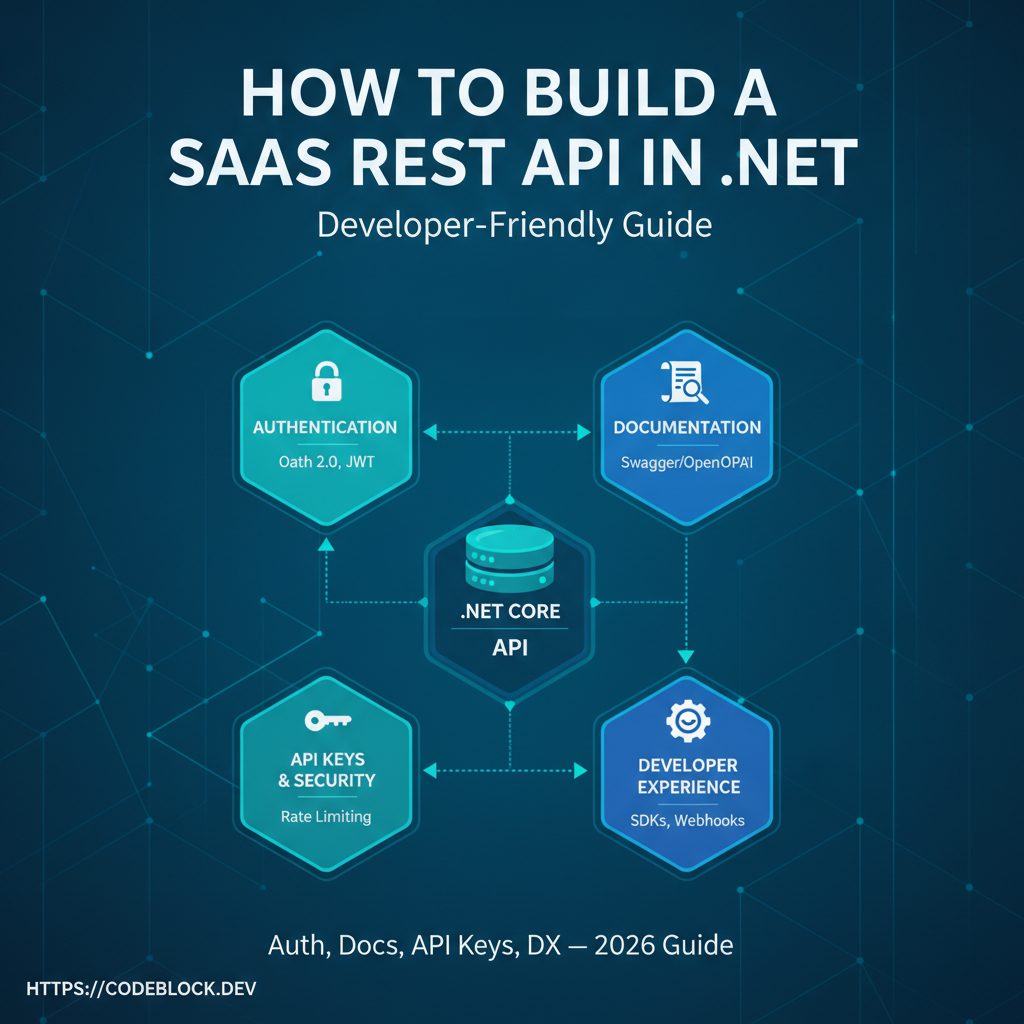
A great API is how many SaaS win. If developers can integrate in minutes (not hours) and trust your API, they’ll do your product marketing for you. Here’s a step-by-step playbook for building a production-ready REST API in .NET/Blazor for SaaS, with world-class security, docs, and DX in 2026.
1. Structuring RESTful, Versioned APIs
- Organize endpoints clearly:
/api/v1/{resource}/...(version in URL, never querystring) - Use nouns for resources, verbs for actions, and pluralize (
/users/{id}/activate) - Consider
/tenant/{tenantId}/api/v1/...for multitenant SaaS - Plan deprecation early: announce v2+ before breaking changes, and offer grace periods
2. Secure Authentication: JWTs, API Keys, Tenant Separation
- Require JWT for user/tenant endpoints (integrate with ASP.NET Identity, Azure AD, or OAuth)
- Offer API key registration for 3rd-party/dev customers: each key is rate-limited, scoped, and revocable
- Never allow unauthenticated POST/PUT/DELETE; log and throttle abuse
- Support key rotation and emergency revocation
- For public endpoints, set anonymous/usage quotas
3. In-Product DX: Docs, Sandboxes, and Support
- Auto-generate OpenAPI/Swagger docs for every route, model, and error code
- Offer a live API docs playground for testing (Swagger UI, Redoc, or Postman collection)
- Provide dev/sample keys for trial/dev/QA
- Document error responses, edge cases, and retry/backoff logic
- Build a “quickstart”/“integrate in 5 minutes” section up front
4. Testing and CI/CD for APIs
- Write e2e tests for all critical flows (Xunit/Nunit)
- Contract test APIs to enforce shape/compatibility for all clients in CI (Pact, Swagger diff, etc)
- Run old and new API versions in parallel for migrations
- Monitor for regressions, performance, and usage in production
5. Monitoring, Logging, and Rate Limiting
- Log all requests, responses, and error codes centrally (Seq, ELK, Serilog)
- Alert on spikes (rate, errors, abuse) and keep detailed metrics per API key/user/tenant
- Add per-route and global rate limits, including per-tenant/user controls
6. Seamless Upgrades, Versioning, and Support
- Support multiple active versions for grace period/compatibility
- Communicate changes with client mailing lists and doc changelogs
- Offer early access and migration guides for API beta versions
- Deprecate only after traffic drops or all clients have clean upgrade paths
7. CodeBlock DevKit: API Automation Superpower
CodeBlock DevKit auto-wires world-class API features:
- Auth, API key management, tenant isolation, OpenAPI docs, and out-of-the-box rate limiting
- Auto-generated tests, error logging, and versioned API routing
- Structured onboarding/quickstart flows for devs and teams
- Sandbox environments and fast support escalation
Launch & Support Checklist
- Versioned routes and clear endpoint organization
- JWT authentication and per-client API keys handled
- Resilient, auto-generated docs with quickstart/FAQ
- Log, monitor, and alert on usage/errors/abuse
- Client onboarding, support, and migration process documented
- Test suites for e2e, regression, and contract testing