How to Price Your Freelance SaaS Development Services
Pricing is what transforms your freelance SaaS work from stressful hustle to a real business. Here’s how to get what you’re worth—and keep clients happy—by choosing, justifying, and defending the right model in 2026.
1. Hourly, Fixed, Value: Pros and Cons
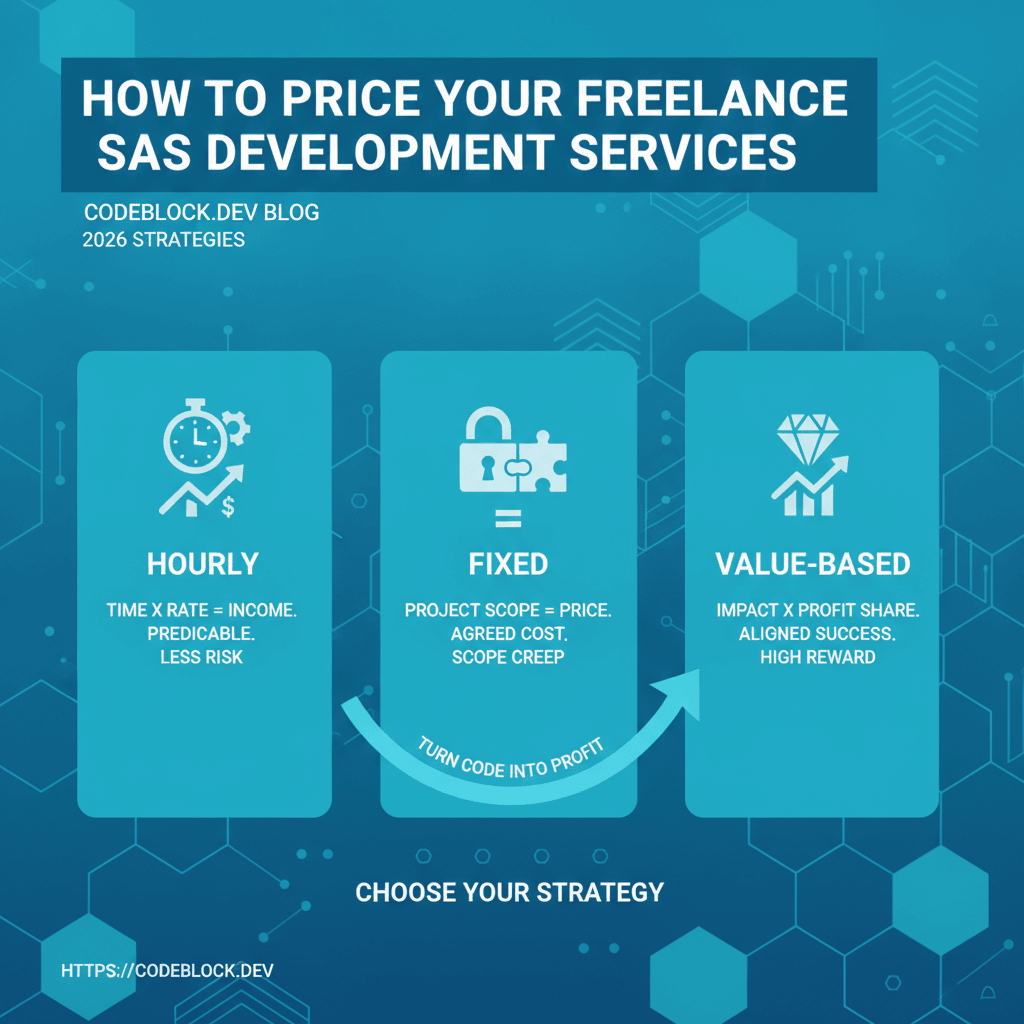
- Hourly: Best for fuzzy, exploratory, or evolving work. But clients often dislike open-ended bills.
- Fixed project fee: Great for well-defined scopes; clients see predictability, you lock in base profit. Risk: change requests and “scope creep.”
- Value-based: Price to the ROI (client revenue, user saves, business value). Harder to win at first, but unlocks premium rates for experienced freelancers with a reputation/case studies.
2. How to Choose What Fits
- “Discovery first” approach: probe client’s needs, timeline, risk, and what success looks like for them
- For tightly-scoped, boilerplate-repeat projects (like with DevKit): fixed or milestone-based pricing often wins
- If client won’t define/commit scope: hourly, with upfront weekly cap and weekly invoice
- High-impact/biz-critical work: value-based, with proposals centered on measurable outcomes (user growth, revenue, speed)
3. Writing the Winning Proposal
- Always scope work, break into timed milestones, share payment schedule and review/approval points
- Show your process: “I use proven .NET SaaS kits so you pay less for setup and get live in days.”
- Share case studies/refs: “See how I built X in 1 week, $Y revenue increase, Z NPS adjustment”
- Defend your price by explaining support hours, warranty/bugfixes, and handoff process
- Add change clauses: “Extra features after launch billable at X rate or renegotiate milestone”
4. DevKit-Driven Pricing—Your Secret Weapon
CodeBlock DevKit lets you quote fast, stable, higher-margin projects:
- Fast launch: Less code, more value, fewer unknowns
- Predictable scope: You know core time/cost, so you can offer tight guarantees and avoid overruns
- Support as up-sell: Offer maintenance, upgrades, analytics, “growth partner” options in the proposal
5. Freelancer Pricing Checklist
- Client/project fit (hourly, fixed, or value-based) assessed and communicated
- Milestones/acceptance points written into every contract
- Scope is clear, change requests planned for
- Premium justified with DevKit/boilerplate time savings and case studies
- Payment, warranty, and retainer/support terms stated upfront