SaaS Foundations: The Hidden Work Behind a Real Product
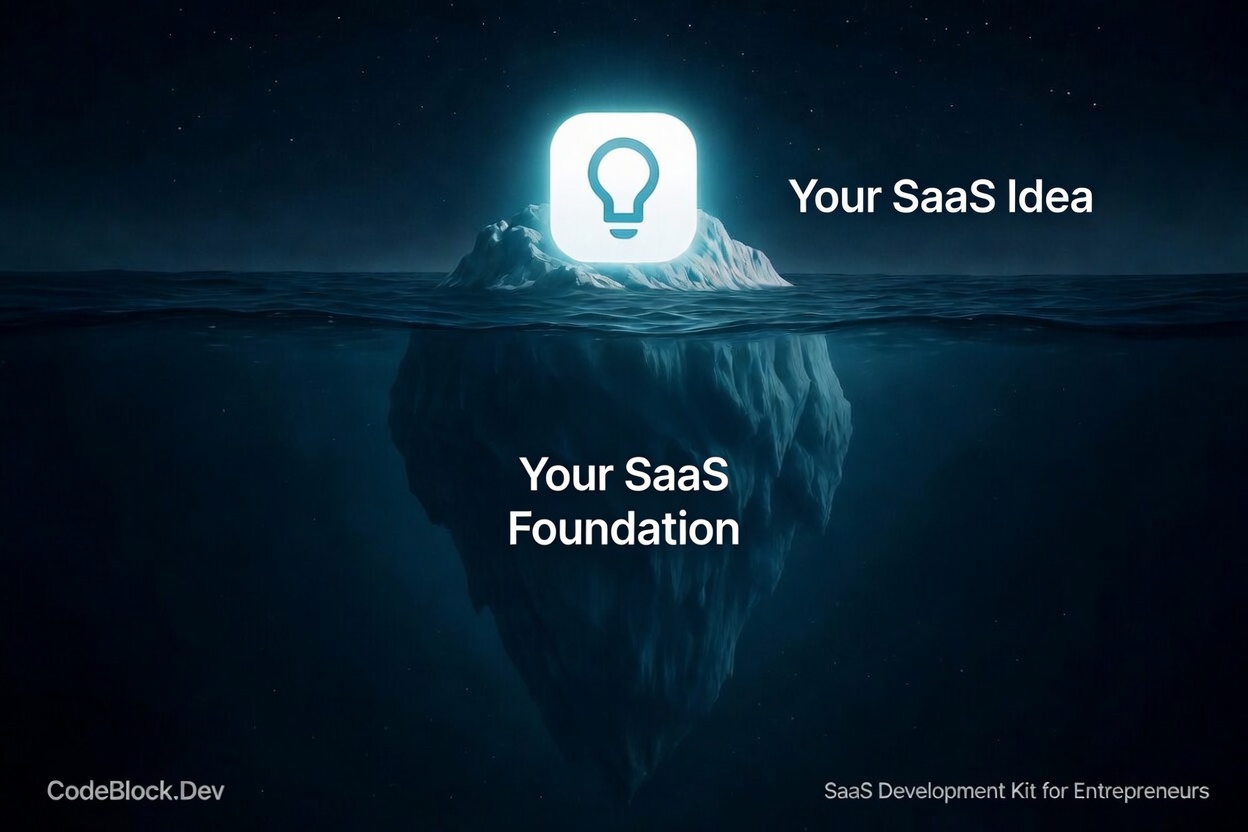
It’s not your idea that slows SaaS projects down, it’s everything you have to build around it before real users can use, trust, and pay for your product.
If you’re new to the concept of SaaS, start with What is SaaS? A simple guide (with a real example).
What “Foundation” Really Means
Your SaaS foundation is the minimum you absolutely need:
- User accounts, signup, and login
- Role-based permissions and admin controls
- Handling payments, plans, and subscriptions
- Keeping the system running when (not if!) things break
Most developers dramatically underestimate this work, until they try to launch.
Four Critical Layers (Before Features)
1. User Access and Authentication
Before building features, you need a rock-solid way for users to get into (and stay in) your product.
This means:
- Signup and login flows (email, password, social login, or magic links)
- Email verification and password reset
- Consistent session management
If you get these wrong, you create endless support headaches. For a detailed breakdown of what SaaS authentication actually involves and what you can defer, SaaS Authentication: What You Need to Build (and What You Can Skip) covers each layer.
2. Admin Controls and Permissions
As soon as you have users, you need to control who can do what.
You’ll need:
- Admin, staff, and customer roles
- Permissions for sensitive actions (like billing or user management)
- Internal tools for supporting users (changing their plans, applying discounts, seeing issues)
Every feature you ever add, billing, content, integrations, depends on this working.
3. Payments, Pricing, and Plans
This is where your project turns into a business.
You need:
- Flexible plan and pricing tiers
- Flows for users to subscribe, upgrade, downgrade, or cancel
- Logic for real cases (failed payments, retries)
- Instantly updating access when plans change
Edge cases? Invoicing, refunds, double charges, changing discounts, these are not rare. They are normal.
4. Monitoring and Reliability
Once people depend on your product, you have to know what’s happening at all times.
Minimum baseline:
- Logs for debugging what went wrong
- Health checks for your core systems
- Visibility into background jobs (renewals, emails, billing runs)
Without this, small issues snowball into disasters you cannot trace.
What You Can (Usually) Delay
Not everything has to be built on Day One. You can often postpone:
- Advanced analytics
- Full localization
- Rare payment methods
- Deep product customization
But anything to do with users, money, or reliability is mandatory from the start.
The Hidden Realization
Eventually, every SaaS builder realizes:
Building a SaaS is not just about your idea, it’s about everything required to support that idea in real life.
Authentication, permissions, billing logic, admin tools, monitoring. These aren’t “nice extras”, they’re essential before you can call your product usable.
The Shortcut: Stand on Solid Foundations
At this point you have two choices:
- Build all these foundations yourself
- Use something that gives them to you
A SaaS development kit - also called a SaaS boilerplate - is the shortcut every founder wishes they’d taken sooner.
For .NET SaaS, CodeBlock DevKit provides modules for:
- Authentication & user management
- Admin panel & permissions
- Pricing, payments, and subscriptions
- Monitoring and health checks
- Settings, licensing, and more
The key: these pieces work together as an actual application, not scattered code samples.
You start by focusing on your idea…
But you win by delivering everything else users expect.
Closing: Why Foundations Matter
Shipping a SaaS is not just about your core logic.
It’s about making that logic usable, manageable, and reliable for real users.
Once you see the full picture, you realize why so many products grind to a halt before they launch,
and why building on a solid foundation changes everything.