SaaS Multi-Tenancy in .NET: Database Strategies and Implementation
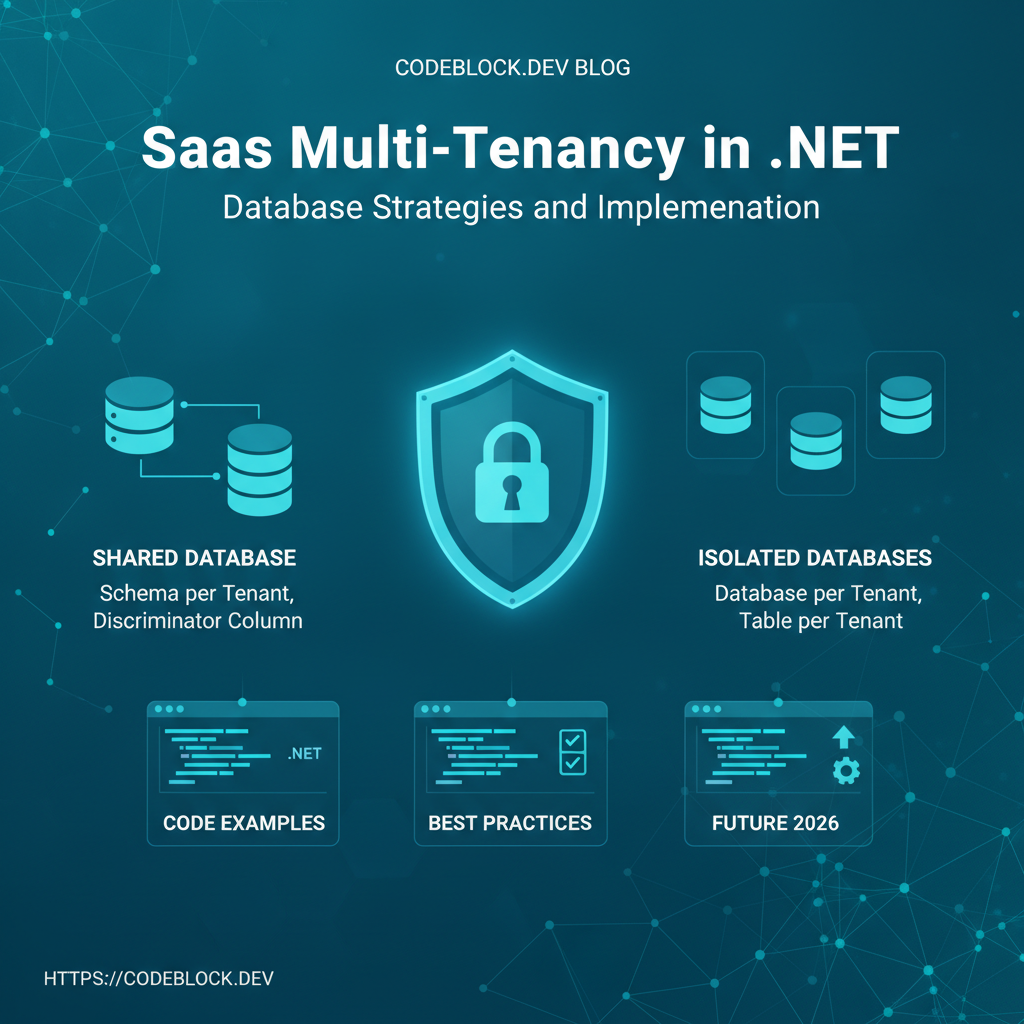
Multi-tenancy is the heart of SaaS scale and customization. Doing it right unlocks security, cost-saving, and future-proofing. Here’s the production checklist for 2026 .NET SaaS database design.
1. Shared vs Isolated—Pick Strategy To Fit
- Shared DB: Single DB with TenantId column on every record. (+) Fast, simple, less infra/cost; (-) risk: code bug could leak data between tenants
- Schema-per-tenant: One DB, multiple schemas, one per tenant. (+) Stronger isolation, still cost-effective until 100s+ tenants
- DB-per-tenant: Enterprise/regulated/mission-critical—total isolation, but highest management cost
2. Decision Factors and Operational Trade-Offs
- Regulatory: privacy, audit, export, data residency
- Scale: row count per tenant, tenant churn/growth, customizations by tenant
- Ops: backup/restore, failover, per-tenant migrations, downtime impact
- Cost/calculation: hosting, maintenance, automation
3. Implementation Patterns for .NET
- Use multi-tenant-aware ORMs (EF Core, Mongo, Dapper) with “TenantContext” passed by middleware/dependency injection
- Set up connection string resolution on per-request/context basis
- Always enforce per-tenant filter server-side—never trust user input only!
- Build/test tenant boundaries: fuzz/test automation, audits, isolation drills before go-live
4. DevKit Modules: Fast Path To Secure, Flexible Multi-Tenancy
CodeBlock DevKit supports both shared and isolated strategies:
- Switch tenant strategies with config; built-in admin/migration tools
- Automatic upgrade paths for growing SaaS—move up from shared to isolated with real examples
- Audit, role, and support module overlays for compliance, reporting, and backup/recovery
Multi-Tenancy Launch Readiness Checklist
- Architecture picked and justified (shared/schema/db per tenant)
- Tenant-aware DB/model/ORM setup, context in every query
- Data, operational, and backup tests run for all tenant ops
- Dashboard/Audit admin UI for support/compliance
- Migration/testing plan in place for scale/join/exit
Explore next: