What Is a SaaS Agreement Template? (And Do You Need a Lawyer?)
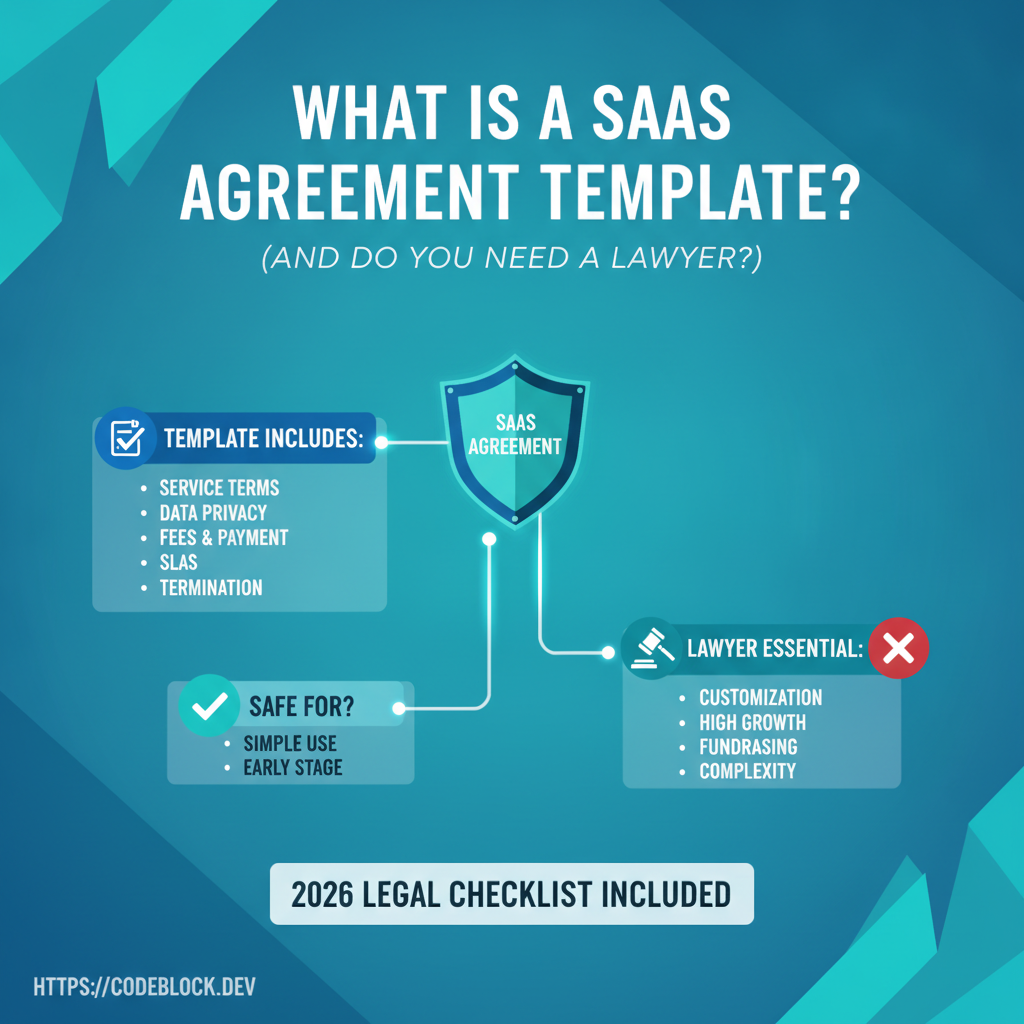
Great products attract users, but only well-crafted agreements protect your business. Most SaaS founders start with a template, yet contracts are where risk or regret accumulate if you guess. This guide demystifies SaaS agreement templates in 2026, what they cover, and when DIY stops making sense.
What’s Actually in a SaaS Agreement Template?
Key Sections:
- Terms of Service: Usage limits, customer obligations, restrictions
- Privacy/Data: GDPR, CCPA/other data compliance; policy on retention/deletion, data processors, and customer data rights
- Service Levels: Uptime promises, support SLAs, refunds and exceptions
- Payment & Renewal: How billing, renewals, and price changes are handled
- Termination, Limitation, & Liability: Rights to suspend, refund, or limit service; legal jurisdiction
When Can Founders Use Templates? When to Lawyer Up?
- For vanilla B2B SaaS (self-serve, low ticket): a well-chosen template + careful review (and perhaps a paralegal) gets you 90% of the way
- For regulated, high-value, or enterprise SaaS: always consult a SaaS specialist lawyer
- For international (multi-region) sales: data protection and tax gets complex; legal review is critical
- For high-risk domains (health, finance): skip templates, go straight to a specialist
- The fastest way to regret: blindly copy/paste without understanding what each clause means
Where to Find Templates
You can find numerous SaaS agreement templates and ready-to-use terms online. For teams looking to shortcut legal admin without skipping protection, CodeBlock DevKit provides links to proven contract and legal templates, in addition to the technical foundation for your SaaS application itself.
Checklist: Safe Use of SaaS Agreement Templates
- Read the template line by line; adapt to your business, don’t paste verbatim
- Confirm coverage for your data region(s) and target customers
- Clarify refund, cancellation, and support terms in plain language
- Document how contract changes or updates will be communicated
- Schedule a legal review before major milestones (launch, entering new countries, raising funds)
Legal Best Practices for SaaS Founders
- Maintain up-to-date copies of all terms (archive old vs. new)
- Provide accessible links to all agreement templates (in-app and in signup flows)
- Make terms as readable as possible (plain English over legalese)
- Seek feedback from major customers — what gives them pause?
Further legal reading: