What Is a Free SaaS Template? (And When Free Isn't Enough)
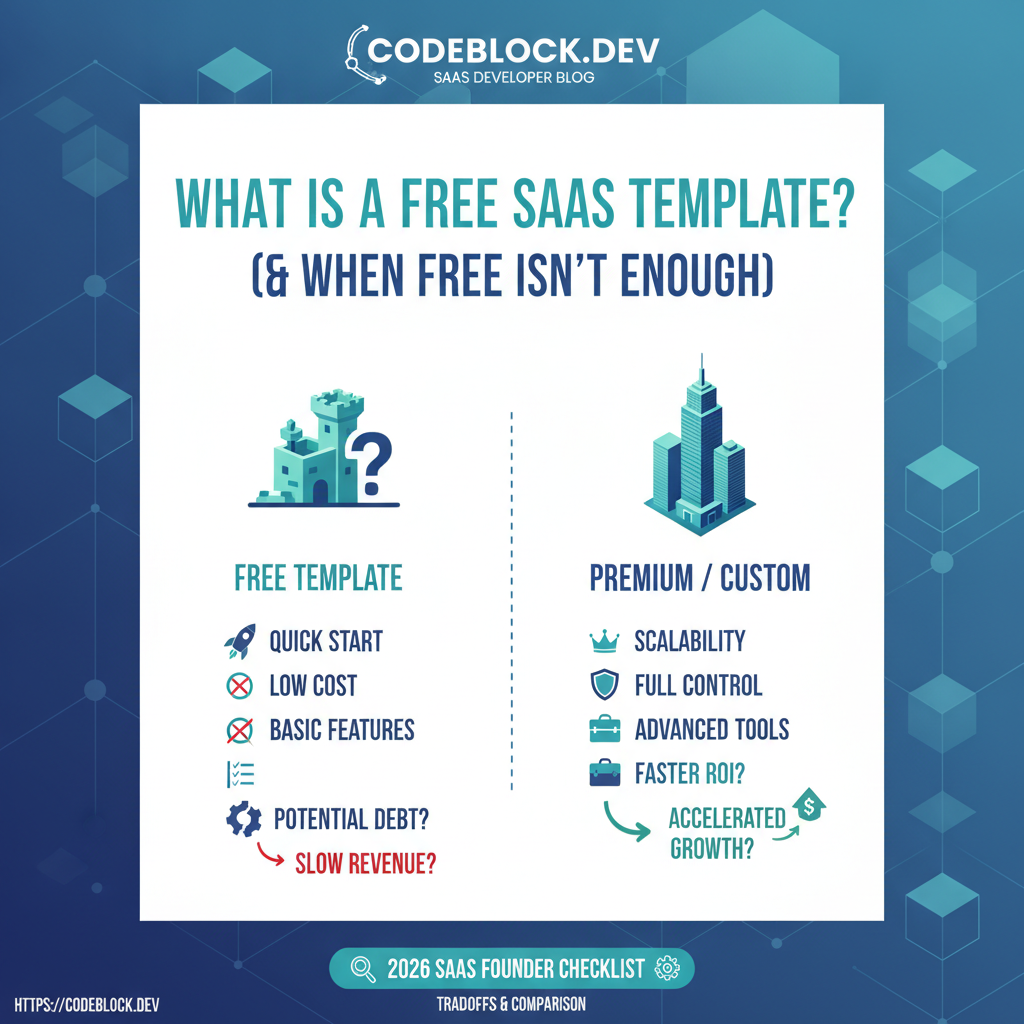
Most SaaS founders start with the same question: can I ship using just a free SaaS template? There’s never been more open-source code and “starter kits” for SaaS, but the gap between demo and launch-ready product has never been wider. Here’s a modern, non-hyped look at when free templates fit—and when you’ll pay more in time, money, or technical debt.
What Free SaaS Templates Provide (and What They Don’t)
Upsides:
- Instant proof of concept, demo, or hackathon entry
- Functional basics: user signup, login, and a simple UI
- Sometimes open code for learning how a SaaS app works
Limitations:
- Rarely include Stripe/billing (especially proration, retries, or global support)
- No real admin panel, user management, or reporting
- No upgrade path: you inherit stale dependencies, few docs, and bugs
- Minimal if any security hardening
- No production support or ongoing updates — you’re signing up as maintenance lead
When Is Free the Right Call for SaaS?
- You’re building a one-off prototype, demo, or short-term experiment
- Learning, research, or portfolio project — low-risk discard
- You sincerely expect to throw away the MVP before serving real users
What Do Paid Templates and DevKits Add?
Professional SaaS demands:
- End-to-end payments: Stripe-ready, dunning support, compliance, audit
- Real admin/user/config management
- Built-in upgrade/update pipeline; someone else does patching
- Documentation and samples, plus (in real devkits) user support
- Lower lifetime cost if you plan to scale
CodeBlock DevKit, for example, combines a full SaaS skeleton (auth, admin, billing, onboarding, docs) designed for .NET teams who value security, audit, and road-tested patterns — not just code that runs locally once.
Checklist: Are You Ready to Go Beyond Free?
- Can you explain every third-party dependency you’re using?
- Do you have a plan for security, billing upgrades, and admin UX?
- Do you have the time to maintain and patch core boilerplate?
- How will you migrate data later if you want to grow or pivot?
- Do you need trusted support for launch or scaling?
- Is your goal to impress investors/customers, not just ship code?
The Real Cost: Free Isn’t Free if It Slows You Down
It costs less to use a great free template, but only if you’re learning or launching "just for fun." If you need real upgrades, support, or future-proofing, paid devkits save months and prevent “foundation hell.”
Further reading: