What Is SaaS Clean Architecture and Why It Matters
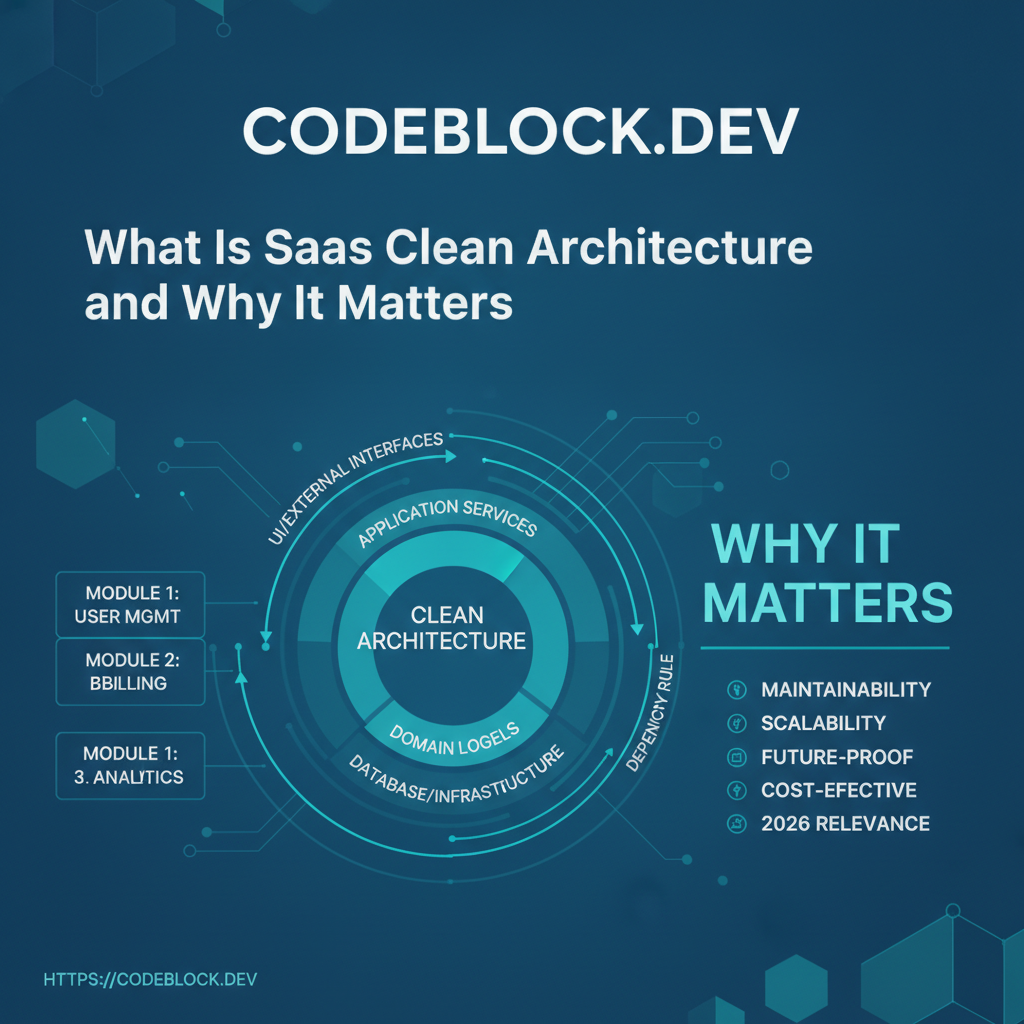
You can brute-force an MVP, but scaling means code that lasts. SaaS clean architecture is the foundation for apps you can maintain, extend, and onboard new developers into—without tech debt bankruptcy. Here’s why it matters more in 2026 than ever before.
Clean Architecture in SaaS: Demystified
- Layered, hexagonal, or onion design: Separate Domain (core logic), Application (use cases), Infrastructure (APIs, DB, cloud), and UI (web/API/Blazor).
- Each layer knows only what it must; business logic never “leaks” into UI or DB code.
- .NET/Blazor: Each core module (auth, billing, analytics, notifications, onboarding) has a well-defined interface/boundary.
Why It Pays Off (Real World)
- Easy upgrades and bugfixes: You can change a module, update a vendor, or launch a feature in isolation—less regression, less QA burden.
- Onboarding new devs: No “hidden magic.” Teams grow, and docs/tests/dev handoff all work because boundaries are clear.
- Scale and compliance: Multi-tenancy, billing, PII, and audit control are all easier to reason about and prove to partners or auditors.
- Testing: With DI, contract boundaries, and clear event flows, it’s possible to unit/integration test every core feature before users ever see them.
- Tech upgrades: Swap UI frameworks, databases, or billing/infra vendors quickly, future-proofing for market changes or scaling hits.
How It Looks (SaaS-Specific Layering)
/Src
  /Domain (core entities, business rules)
  /Application (use cases, services)
  /Infrastructure (DB, APIs: e.g., Stripe, SendGrid, Node/JS clients)
  /UI (Web, API, Blazor)
  /Modules (auth, billing, admin, analytics)
- Each module exposes interfaces/contracts, never direct DB/type coupling; core logic tested in every layer
Anti-Patterns and Real Risks
- Mixed concerns: If you find DB calls in UI, business logic in controller, or duplicate logic across services—you’ve got work to do.
- Fixes gone wild: Bugs in one feature regress others, code “rot” causes fear of shipping, QA cost skyrockets.
- No clear boundaries: Slow developer onboarding, feature rollbacks, or audits break your ops.
Getting Started—From Boilerplate or DevKit
CodeBlock DevKit enables clean architecture by default: modules, layers, upgrade paths, and UI isolation. Start with modules or port your MVP—refactor by moving business logic into domain/application, introduce interfaces for external APIs, and write integration tests for future scaling.
Clean Arch Checklist for SaaS
- Domain, Application, Infrastructure, UI and Module boundaries in codebase
- DI/interfaces—no direct cross-layer access
- Upgrades/fixes and onboarding documented and testable
- Feature, billing, onboarding, analytics, notifications are modular
- Tests and CI in every module, not just “happy path”
Explore more: