How to Build a SaaS with .NET and Blazor: Full Stack Guide
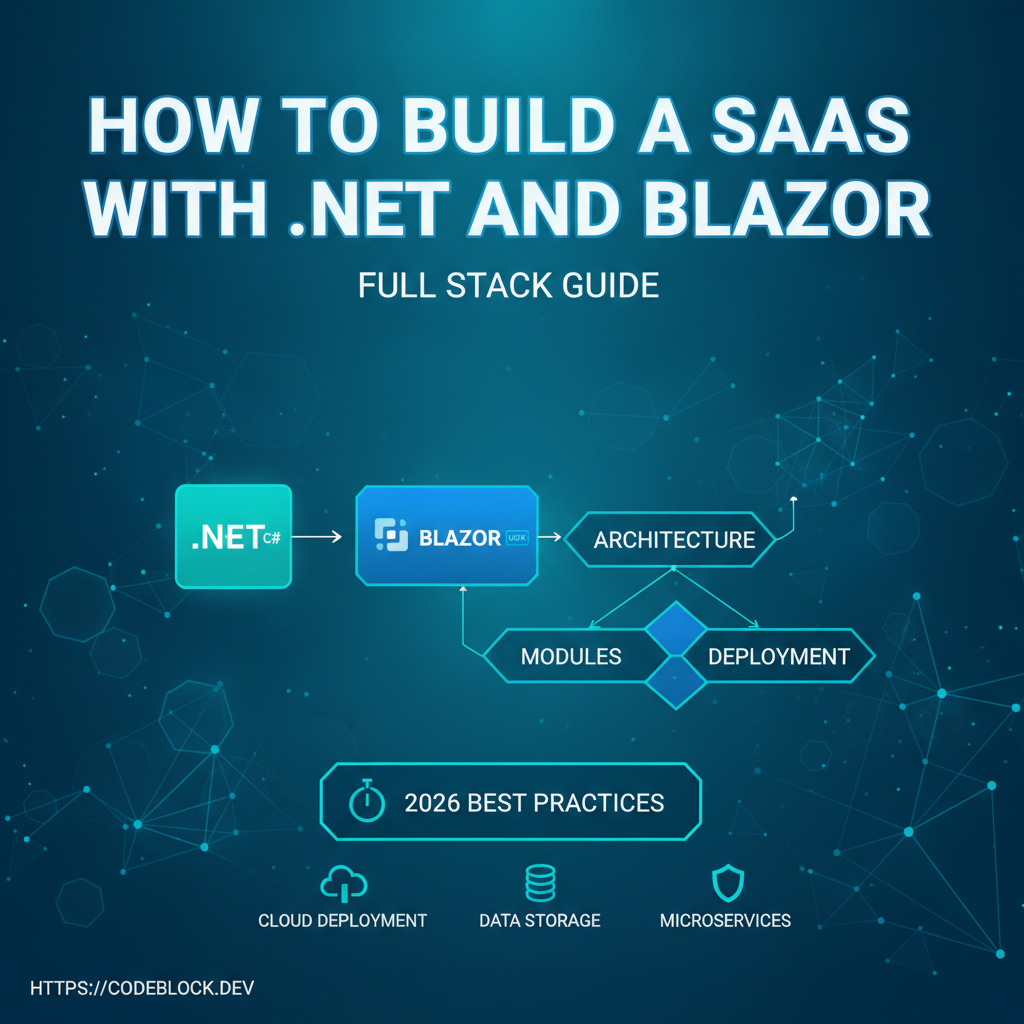
2026 is the year .NET and Blazor went full stack for startups and enterprises. Here’s your comprehensive, technical playbook to launch—and scale—a production SaaS using .NET, Blazor, and proven modular practices.
1. Project Structure: Start Right, Grow Clean
- Use a source layout like:
/Src
  /Api (REST endpoints, service logic)
  /Web (Blazor UI: Server or WebAssembly)
  /Shared (DTOs, auth, constants)
  /Modules (SaaS features—Payments, Admin, Notification)
  /Infrastructure (External integrations, DB)
  /Tests (unit/integration)
- Dependency injection everywhere: services, clients, logging
- Per-environment config: user secrets,
appsettings.{Env}.jsonfor staging/prod
2. Essential Modules for Any SaaS
- Auth/Identity: Multi-method sign-in/up, 2FA, role/claim-based, SSO/OAuth
- Billing/Payments: Stripe, Paddle (PCI-compliant integration, plan mgmt, invoice/receipt)
- Admin Panel: RBAC, user mgmt, logs, manual corrections
- User Panel: Profile, plan mgmt, support, quotas
- Analytics: Usage tracking, events, health, error monitoring
- Notifications/Email/SMS: Transactional and marketing comms
- Localization: Multi-language UI support, tenant-specific settings
- Feature flags: Rollout control, A/B testing, quick fixes
3. Dev, Deploy, and Automation
- CI workflows: PR-triggered tests, build, docker build/push (GH Actions, AzDO, TeamCity)
- Automated migrations: EF Core, rollback support
- Staging/prod environments mirror each other
- Docker (and Compose/K8s for complex deployments): isolate services, test prod-like
- Integrated log/error monitoring (Seq, ELK, or built-in DevKit dashboards)
- Scheduled jobs (Hangfire, Quartz): emails, data sync, reminders
4. Testing/Quality
- Write API and end-to-end tests day one (integration, smoke/UAT, CI all green before merge)
- Seed test tenants/accounts/data for every new module
- Performance/soak tests: simulate real usage loads before launch
5. Growth, Modularization, and Upgrade Safety
- Each module pluggable, updatable, and versioned—prefer NuGet-published/package upgrade model (DevKit style)
- Strong contract boundaries between features; update one without breaking others
- Secure secrets: managed in cloud secret stores, never checked-in
- Audit logging and usage analytics on every core feature
- Regularly rotate keys, tokens, and audit exposed resources
6. Inspiration: Use CodeBlock DevKit as Reference Architecture
CodeBlock DevKit includes:
- Blazor-ready SaaS modules: Auth, Billing, Admin, Analytics, User Panel, etc.
- Staging/prod config, admin portals, CI/CD samples, and detailed docs
- Extend with custom features—rapid prototyping, prod reliability from start
Launch/Maintenance Checklist
- Full stack .NET/Blazor layout with feature modules
- CI/CD and test automation in place
- Secure, environment-driven config for dev, staging, prod
- User/admin panels fully functional
- Payment and onboarding flows tested
- Monitoring/logging active before launch
- Documentation/internal wikis for team/dev onboarding
- Plan for module upgrades and breaking/config-safe migrations