SaaS User Onboarding: How to Get New Users to Their First Success
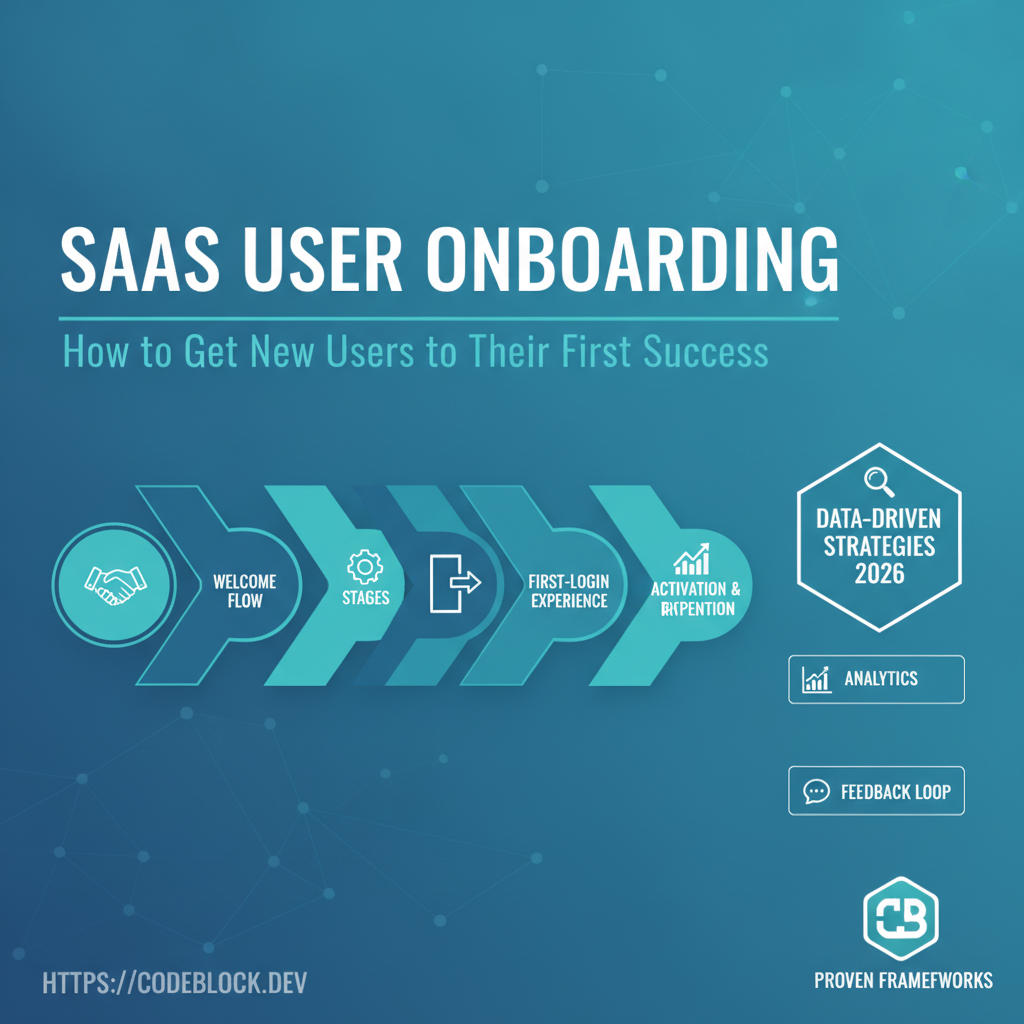
First impressions define whether a SaaS product grows or churns. In 2026, user onboarding means much more than a welcome email: it’s a decisive process that sets new users up for early value — which in turn drives engagement, growth, and retention for months to come. Here’s how leading SaaS teams engineer onboarding flows that actually deliver user success, not just signups.
Why Onboarding Determines SaaS Survival
Your onboarding flow is not a formality. Data shows users who reach “first value” within their first session are 2-4x more likely to activate and pay long term. Founders and growth teams must remove friction, guide first actions, and build trust instantly. Delayed or confusing onboarding is a leading cause of silent churn.
1. Welcome and Seamless Setup
- Send personalized, instant welcome emails with a specific “next action” (not just a generic hello)
- Offer a concise setup or onboarding wizard — prefill what you know (email, basics) to lower friction
- Provide in-app onboarding checklist or progress bar visible on first login
- Show clear links to docs, tutorials, live chat/support, and sample data if available
Example: A B2B SaaS tool welcomes a new user with: “Welcome, Jamie! See how to invite your first team member. Need help? Our live chat is ready.” Ebook or docs links appear in the email and dashboard sidebar.
2. Guide Every User to Their "Aha" Moment
- Pre-configure trial/demo accounts with sample data and settings — don’t land users in an empty product
- Tooltips, walkthroughs, and action highlights for the core 1-3 features needed to make the product valuable
- Offer in-app chat, guided tours, or onboarding webinars for hand-holding if users get stuck
- Use conditional logic to adapt onboarding by plan, role, or cohort
Built wisely, onboarding should look different for a solo founder, a sales manager, and a developer using your product for the first time.
3. Measure and Rapidly Optimize Onboarding with Data
- Track north-star metrics: time-to-first-activity, feature discovery rate, and drop-off at key screens
- Segment onboarding flows and monitor performance by user persona or trial cohort
- Use real user feedback (surveys, NPS scores, session recordings) to spot friction points
- Test and refine onboarding steps quarterly — what worked last year rarely works forever
Example Metrics:
- % of users who import their data within 24 hours
- Avg. time from signup to first meaningful action (invite, integration, payment)
- Churn rate linked to users who skip onboarding vs. those who complete it
SaaS User Onboarding Checklist
- Personalized welcome email sent immediately on signup
- First-login wizard or checklist guiding to “first value”
- Pre-configured demo data or settings
- Tooltips/walkthroughs for top features
- Real-time support links (chat, docs)
- Time-to-first-activity tracked and reviewed
- Onboarding variants for key customer segments
- Feedback channels in place to improve onboarding
Tools and Templates for Faster, Friendlier Onboarding
If you want to skip building onboarding infrastructure from scratch, CodeBlock DevKit gives SaaS teams ready-made modules for user invitation flows, onboarding checklists, customer segmentation, and analytics. Pre-built onboarding processes and extensible UI save weeks (or months) while letting you customize every touchpoint. For serious founders, leveraging a battle-tested foundation is often the single best shortcut to getting users to their first success, faster.
Put It Into Practice: Examples and Further Reading
For inspiration and benchmarks, see: